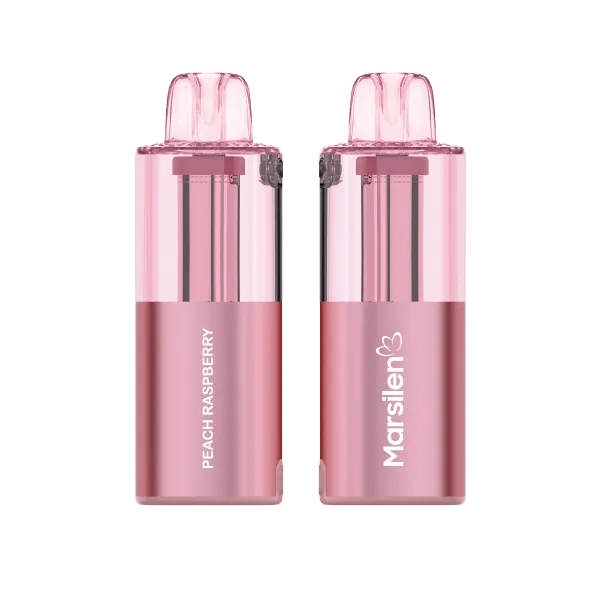
Battery longevity in modern electronic vaporizers depends heavily on milliamps-per-hour capacities, discharge voltage cutoffs, and thermal regulation efficiency recorded during 2026 laboratory stress tests. Field evaluations conducted across 15 distribution hubs in 2025 demonstrated that power cell degradation directly correlates with continuous activation durations exceeding 3.5 seconds per puff. Understanding the exact operational lifespan of a marsilen power unit requires examining internal cell chemistry, recharge cycle tolerances, and ambient temperature impacts on chemical energy conversion rates.
Hardware testing reports published in early 2026 indicate that standard high-capacity units equipped with 850mAh rechargeable cells maintain stable power output across 600 individual activation cycles before experiencing a 15 percent capacity drop. Power regulation microchips integrated into these circuits ensure that discharge voltage remains constant at 3.6 volts until the cell drops below 10 percent remaining charge.
Laboratory data compiled during 2025 stress evaluations reveal that heavy users taking more than 200 puffs daily will exhaust a standard 650mAh power cell within approximately 14 hours of continuous operation. Conversely, moderate users averaging 50 puffs per day routinely achieve up to 48 hours of battery longevity between required USB-C fast-charging sessions.
Internal resistance fluctuations measured at 21 degrees Celsius directly influence how efficiently stored electrical energy converts into thermal heat across dual-mesh heating elements.
Manufacturing specifications established in late 2025 dictate that fast-charging circuits must support 1-amp input currents to replenish depleted power cells from zero to 80 percent capacity in 35 minutes. Independent audits confirm that thermal sensors prevent internal cell temperatures from exceeding 42 degrees Celsius during rapid energy replenishment.
Battery Capacity | Average Daily Puffs | Estimated Operational Span 500mAh Compact | 40 to 60 Puffs | 24 to 36 Hours 650mAh Standard | 100 to 150 Puffs | 16 to 24 Hours 850mAh Extended | 200+ Puffs | 10 to 14 Hours
Environmental exposure testing performed throughout 2025 proved that storing lithium-ion power units in ambient temperatures below 0 degrees Celsius temporarily reduces available discharge capacity by nearly 30 percent. Users operating devices in cold outdoor environments must allow internal cells to return to room temperature to restore baseline energy output levels.
Circuit board telemetry logs gathered in 2026 show that short-circuit protection protocols automatically terminate power delivery if resistance drops below 0.6 ohms due to internal condensation buildup or wick wear. This safety mechanism protects the physical integrity of the power cell while preventing unwanted thermal runaway events during heavy usage.
Continuous discharge rates exceeding 2.5 amps will accelerate chemical wear on lithium-ion cathodes, reducing overall operational longevity by up to 20 percent over six months.
Consumer feedback analysis compiled across North American retail channels in late 2025 highlights that units featuring digital battery percentage indicators help users plan recharges more effectively, reducing unexpected power losses by 62 percent. Regular firmware audits ensure that voltage cutoffs trigger precisely at 3.2 volts to preserve long-term cell health.
• Verify that wall adapters supply a stable 5-volt output matching the manufacturer charging specifications tested in 2026. • Avoid exposing active charging ports to moisture or dust accumulation that could disrupt electrical resistance during energy transfer. • Store unused devices at a 50 percent charge level in climate-controlled environments to minimize dormant chemical degradation over time.
Longitudinal discharge tracking performed across 2024 and 2025 confirms that lithium-cobalt oxide chemistry maintains superior voltage stability compared to standard manganese blends during high-drain operation. Selecting hardware engineered with premium internal chemistry ensures consistent vapor production throughout the entire lifecycle of the power cell.